Last updated: September 14, 2026. Whether you are chasing a personal best in Berlin or just want to finish strong in New York, this marathon pace chart shows the exact splits you need for any goal time from 2:45 to 5:45. Find your target finish, note your checkpoint splits, and print the one-page version to carry on race day. The chart is evergreen and works for any 26.2, but the three big fall majors are all within the next several weeks.
2026 Fall Marathon Dates
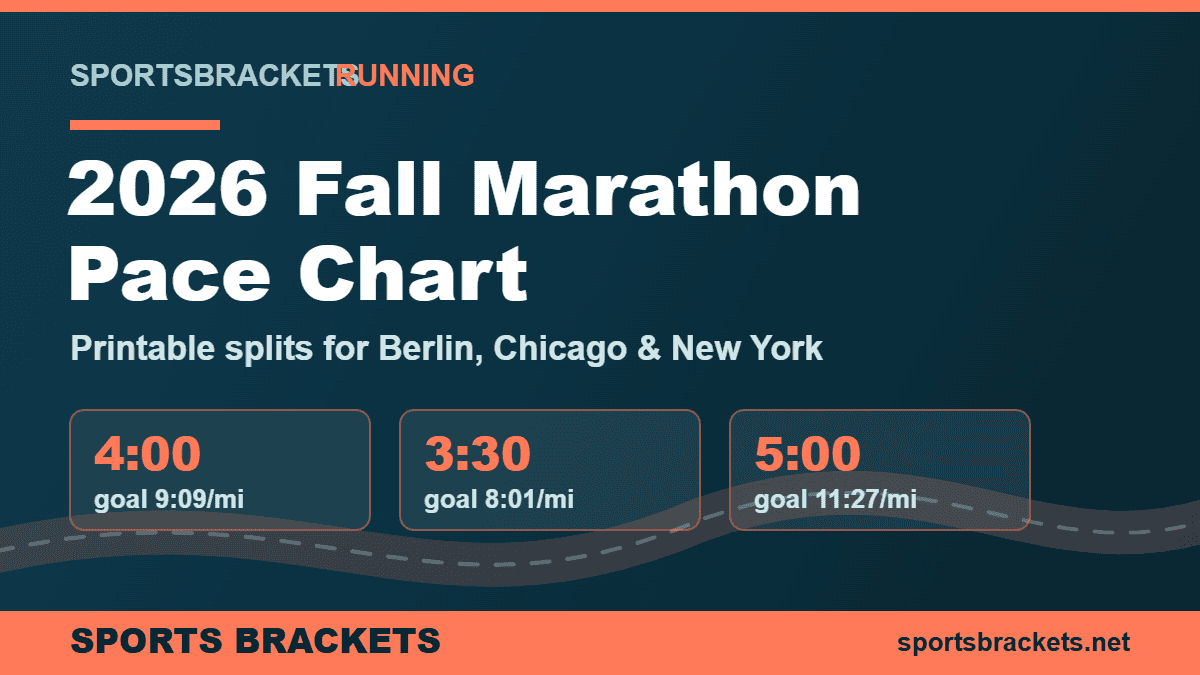
The fall stretch of the Abbott World Marathon Majors runs from late September through early November. Here is when the three big ones go off in 2026.
| Marathon | 2026 Date | Location |
|---|---|---|
| Berlin Marathon | Sunday, September 27 | Berlin, Germany |
| Chicago Marathon | Sunday, October 11 | Chicago, USA |
| TCS New York City Marathon | Sunday, November 1 | New York, USA |
Marathon Pace Chart: Every Finish Time and Split
Read across your goal finish time to see the pace you need per mile and per kilometer, plus the elapsed time you should see on the clock at the 10K, halfway, 30K, and 20-mile marks. These are even-split targets on a flat course, which is the smartest way to run all but the hilliest races.
| Goal Finish | Pace / mile | Pace / km | 10K | Half | 30K | 20 mi |
|---|---|---|---|---|---|---|
| 2:45:00 | 6:18 | 3:55 | 39:06 | 1:22:30 | 1:57:19 | 2:05:52 |
| 2:50:00 | 6:29 | 4:02 | 40:17 | 1:25:00 | 2:00:52 | 2:09:41 |
| 2:55:00 | 6:40 | 4:09 | 41:28 | 1:27:30 | 2:04:25 | 2:13:30 |
| 3:00:00 | 6:52 | 4:16 | 42:40 | 1:30:00 | 2:07:59 | 2:17:18 |
| 3:05:00 | 7:03 | 4:23 | 43:51 | 1:32:30 | 2:11:32 | 2:21:07 |
| 3:10:00 | 7:15 | 4:30 | 45:02 | 1:35:00 | 2:15:05 | 2:24:56 |
| 3:15:00 | 7:26 | 4:37 | 46:13 | 1:37:30 | 2:18:39 | 2:28:45 |
| 3:20:00 | 7:38 | 4:44 | 47:24 | 1:40:00 | 2:22:12 | 2:32:34 |
| 3:25:00 | 7:49 | 4:52 | 48:35 | 1:42:30 | 2:25:45 | 2:36:23 |
| 3:30:00 | 8:01 | 4:59 | 49:46 | 1:45:00 | 2:29:18 | 2:40:11 |
| 3:35:00 | 8:12 | 5:06 | 50:57 | 1:47:30 | 2:32:52 | 2:44:00 |
| 3:40:00 | 8:23 | 5:13 | 52:08 | 1:50:00 | 2:36:25 | 2:47:49 |
| 3:45:00 | 8:35 | 5:20 | 53:19 | 1:52:30 | 2:39:58 | 2:51:38 |
| 3:50:00 | 8:46 | 5:27 | 54:31 | 1:55:00 | 2:43:32 | 2:55:27 |
| 3:55:00 | 8:58 | 5:34 | 55:42 | 1:57:30 | 2:47:05 | 2:59:16 |
| 4:00:00 | 9:09 | 5:41 | 56:53 | 2:00:00 | 2:50:38 | 3:03:04 |
| 4:05:00 | 9:21 | 5:48 | 58:04 | 2:02:30 | 2:54:11 | 3:06:53 |
| 4:10:00 | 9:32 | 5:55 | 59:15 | 2:05:00 | 2:57:45 | 3:10:42 |
| 4:15:00 | 9:44 | 6:03 | 1:00:26 | 2:07:30 | 3:01:18 | 3:14:31 |
| 4:20:00 | 9:55 | 6:10 | 1:01:37 | 2:10:00 | 3:04:51 | 3:18:20 |
| 4:25:00 | 10:06 | 6:17 | 1:02:48 | 2:12:30 | 3:08:25 | 3:22:09 |
| 4:30:00 | 10:18 | 6:24 | 1:03:59 | 2:15:00 | 3:11:58 | 3:25:58 |
| 4:35:00 | 10:29 | 6:31 | 1:05:10 | 2:17:30 | 3:15:31 | 3:29:46 |
| 4:40:00 | 10:41 | 6:38 | 1:06:22 | 2:20:00 | 3:19:05 | 3:33:35 |
| 4:45:00 | 10:52 | 6:45 | 1:07:33 | 2:22:30 | 3:22:38 | 3:37:24 |
| 4:50:00 | 11:04 | 6:52 | 1:08:44 | 2:25:00 | 3:26:11 | 3:41:13 |
| 4:55:00 | 11:15 | 6:59 | 1:09:55 | 2:27:30 | 3:29:44 | 3:45:02 |
| 5:00:00 | 11:27 | 7:07 | 1:11:06 | 2:30:00 | 3:33:18 | 3:48:51 |
| 5:05:00 | 11:38 | 7:14 | 1:12:17 | 2:32:30 | 3:36:51 | 3:52:39 |
| 5:10:00 | 11:49 | 7:21 | 1:13:28 | 2:35:00 | 3:40:24 | 3:56:28 |
| 5:15:00 | 12:01 | 7:28 | 1:14:39 | 2:37:30 | 3:43:58 | 4:00:17 |
| 5:20:00 | 12:12 | 7:35 | 1:15:50 | 2:40:00 | 3:47:31 | 4:04:06 |
| 5:25:00 | 12:24 | 7:42 | 1:17:01 | 2:42:30 | 3:51:04 | 4:07:55 |
| 5:30:00 | 12:35 | 7:49 | 1:18:12 | 2:45:00 | 3:54:37 | 4:11:44 |
| 5:35:00 | 12:47 | 7:56 | 1:19:24 | 2:47:30 | 3:58:11 | 4:15:33 |
| 5:40:00 | 12:58 | 8:03 | 1:20:35 | 2:50:00 | 4:01:44 | 4:19:21 |
| 5:45:00 | 13:10 | 8:11 | 1:21:46 | 2:52:30 | 4:05:17 | 4:23:10 |
How to Use This Pace Chart
Pick the goal finish that matches your fitness, not your fantasy. A recent long run or a shorter race result is the best predictor. Once you have a realistic target, the two pace columns are your minute-per-mile and minute-per-kilometer numbers to lock into your watch. The checkpoint columns are cumulative elapsed times, so if the race clock reads more than the listed 10K or halfway split, you are running slower than goal pace and have room to adjust before it is too late.
Print the one-page PDF and fold it into a wristband or pin it to your shirt. Most experienced marathoners bank nothing early: the first 10K should feel almost too easy, and the real race begins at 20 miles, right where our final checkpoint sits.
Even, Negative, or Positive Splits?
An even split means running the second half at the same pace as the first, and it is what this chart is built around. A negative split, running the second half faster, is how nearly every marathon world record has been set and is the gold standard for a well-executed race. A positive split, slowing down in the back half, is the most common way a goal slips away. If you are running hilly New York, plan to bank a few seconds on the early downhills and expect to give some back on the First Avenue and Fifth Avenue climbs, so aim the effort to stay even rather than the pace.
More Running and Race Resources
Need to work out a pace that is not on the chart? Use our running pace calculator and chart to build a custom split, or the pace and speed converter to switch between minutes per mile, minutes per kilometer, and miles per hour. Planning the rest of your sports year? The 2026 sports calendar maps every major event by month.
Marathon Pacing FAQ
What pace is a 4-hour marathon? A 4:00:00 marathon is 9:09 per mile or 5:41 per kilometer, passing halfway at 2:00:00.
What pace do I need to break 3:30? A 3:30:00 finish requires 8:01 per mile (4:59 per kilometer), with a 1:45:00 halfway split.
Should I run even or negative splits? For almost every runner, even or slightly negative splits produce the best marathon result. Going out faster than goal pace in the first 10K is the single most common race-day mistake.