A smart fantasy football draft strategy is the single biggest edge you can build before Week 1, and it starts long before you are on the clock. Championships are won by managers who walk in with a plan, know how their scoring format changes player value, and stay disciplined when the board gets chaotic. This guide breaks down a round-by-round game plan, the difference between snake and auction drafts, how to attack each position, and the common mistakes that sink good teams. Pair it with our free rankings and printable draft board and you will be the most prepared person in your league.
Listen: the “Draft Night Playbook” episode on our Bracket Banter podcast
Last updated: July 25, 2026. This is general strategy, not player-specific advice; pair it with current rankings before your draft.
Draft Strategy in 30 Seconds
- Know your format first: PPR, half-PPR, or standard changes who is worth drafting.
- Build a foundation early: lock in elite, every-week starters in the first few rounds.
- Value over need in the middle: take the best player available, not the position you feel like filling.
- Wait on QB, K, and DST: the drop-off is small, so spend early picks on RB and WR.
- Come prepared: a printed cheat sheet and tier list beats scrolling an app on the clock.
Fantasy Football Draft Strategy: Start Here
Step 1: Know Your Format and Scoring
Before you rank a single player, understand how your league scores points, because it completely changes player value. In full PPR (point per reception), pass-catching running backs and high-volume wide receivers get a big boost. In standard scoring, touchdown-dependent runners and goal-line backs climb the board. Half-PPR sits in between and is the most common setup today. If you play in a Superflex or two-quarterback league, quarterbacks jump way up your board because you are starting two of them. Match your rankings to your format, or you will draft the wrong players with the right intentions.
Step 2: Snake Draft vs. Auction Draft
Most leagues use a snake draft, where the order reverses each round, so an early pick means a long wait until your next one. If you draft near the turn, plan to take two players back to back and think in pairs. An auction draft gives everyone a budget (commonly 200 dollars) to bid on any player, which means you can land any star you want if you are willing to pay. Auction rewards planning: set target prices, budget for one or two elite anchors, and leave enough to fill out your roster with value. Whichever format you use, knowing it in advance is half the battle.
Step 3: A Round-by-Round Game Plan
Rounds 1 to 3: Build Your Foundation
Use your earliest picks on safe, high-floor players who start every week: elite running backs and top wide receivers. This is not the time to reach for a quarterback or chase upside. You want reliable weekly production to anchor your lineup, so take the best available player at a premium position and do not overthink it.
Rounds 4 to 7: Value Over Need
The middle rounds win drafts. Take the best player available rather than forcing a position, and target running back depth, because injuries are inevitable and starters are gold. This is also the sweet spot to grab a top tight end if one falls, or a receiver with breakout potential. Lean on a tier list here: when a tier is about to empty out, that is your cue to draft from it.
Rounds 8 to 12: Upside and Handcuffs
Now swing for upside. Draft high-ceiling sleepers, rookies with a clear path to touches, and handcuffs (the backup to a starting running back, especially your own). One or two hits here can be the difference between a good team and a champion. Also grab your quarterback in this range if you have not yet; the gap between the 5th and 12th ranked quarterback is usually small.
Rounds 13 and Later: Kicker, Defense, and Fliers
Save your last two picks for a kicker and a defense, and never draft them earlier than that. Streaming these positions based on weekly matchups is often better than rostering a big name. Use any remaining picks on lottery-ticket players with league-winning upside.
Positional Strategy at a Glance
| Position | When to Draft | Why |
|---|---|---|
| Running Back | Early and often | Scarce, injury-prone, and the biggest weekly swing. |
| Wide Receiver | Early to middle | Deep pool, but the elite tier is worth a premium in PPR. |
| Tight End | Elite early or wait | A top-three TE is an edge; otherwise stream late. |
| Quarterback | Rounds 8 to 12 | Small drop-off, so do not pay early (unless Superflex). |
| Kicker / DST | Last two rounds | Minimal edge; stream on matchups instead. |
Common Draft Mistakes to Avoid
- Reaching for a quarterback in the first few rounds when the position runs deep.
- Drafting a kicker or defense before the final two rounds.
- Ignoring bye weeks and stacking too many starters on the same week off.
- Drafting for team names or fandom instead of value.
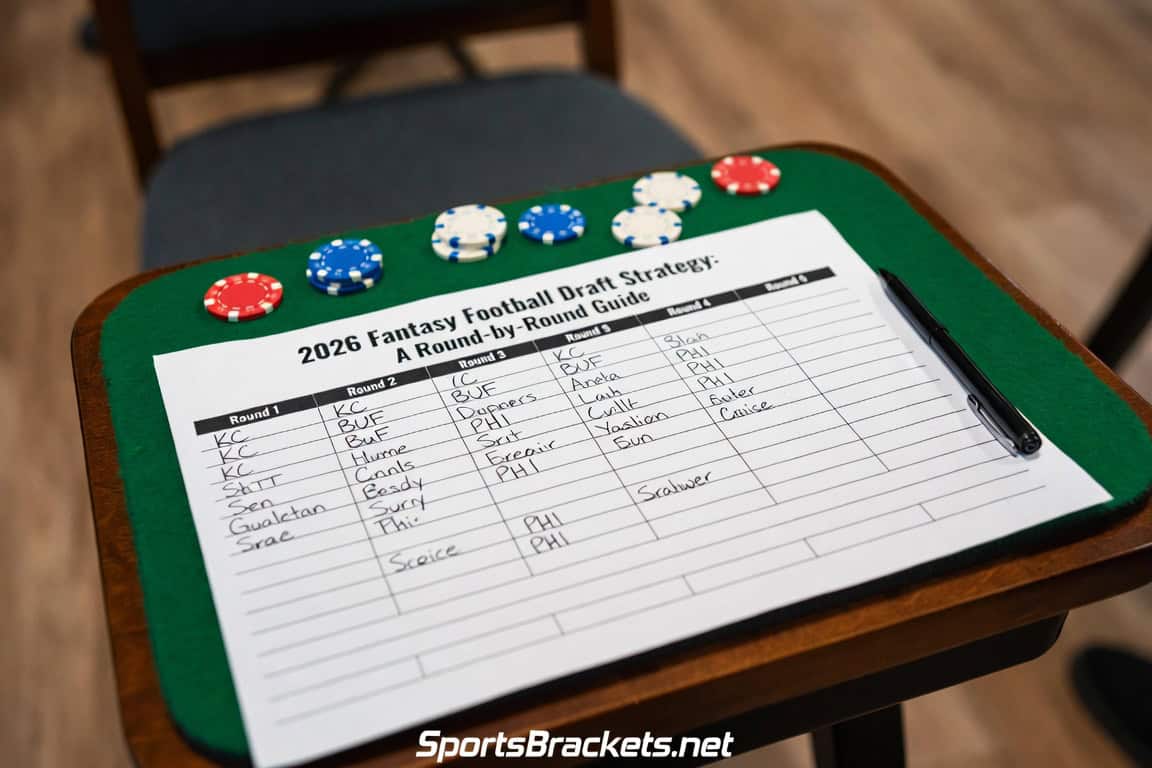
- Walking in without a printed cheat sheet and tier list to stay organized on the clock.
Your Free 2026 Draft Kit
Walk into your draft with everything you need. These free, printable tools pair perfectly with the strategy above:
- 2026 PPR Cheat Sheet – top 200 overall, ready to print.
- Half-PPR and Standard Rankings – match your scoring format.
- Positional Tiers (QB, RB, WR, TE) – draft by tier, not by name.
- Auction Values ($200 Budget) – target prices for auction drafts.
- Sleepers and Busts – the upside picks and the traps.
- Printable Snake Draft Board – track every pick live.
- 2026 NFL Bye Week Schedule – avoid stacking byes.
- Draft Order Randomizer – set your league order fairly.
- 2026 Fantasy Football IDP Rankings (LB, DL, DB)
- Rookie Rankings – weigh the path to touches, not the hype.
- Best Ball Rankings – draft for ceiling and volume.
Frequently Asked Questions: Fantasy Football Draft Strategy
What is the best overall fantasy football draft strategy?
Build a strong foundation with reliable running backs and wide receivers in the early rounds, take the best available player for value in the middle rounds, and wait on quarterback, kicker, and defense. Adjust everything to your scoring format and come prepared with a cheat sheet and tier list.
Should I draft a quarterback early?
In most single-quarterback leagues, no. The drop-off between the top quarterbacks and mid-round options is small, so you get better value spending early picks on running backs and receivers and taking a quarterback around rounds 8 to 12. In Superflex or two-quarterback leagues, quarterbacks move way up and should be drafted much earlier.
When should I draft a kicker and defense?
Save them for your final two picks. The week-to-week difference between kickers and defenses is small and unpredictable, so it is usually smarter to stream them based on matchups than to spend a valuable early pick.
What is a handcuff in fantasy football?
A handcuff is the backup running back who would take over if your starter gets hurt. Drafting the handcuff to your own star running back protects your team, and grabbing other high-upside backups late can win you the season if a starter goes down.
More 2026 Football Coverage
- 2026 NFL Printable Schedules (All 32 Teams)
- 2026 NFL Training Camp Schedule
- 2026 College Football Schedule