You trap the ball in the middle of the park, hear footsteps closing in, and your brain goes blank. If you have ever wondered how to not panic when you get the ball in soccer, you are in good company. It is one of the most common problems for grassroots and youth players, and a version of it shows up at every level of the game.
Here is the part nobody tells you: panic on the ball is rarely about touch or talent. It is about information and time. The midfielders you are watching at the World Cup look calm because they gathered the picture before the ball arrived, so the moment feels slower to them. Composure is a skill you can train, and these are the habits that build it.
Why Panic Happens When the Ball Reaches Your Feet
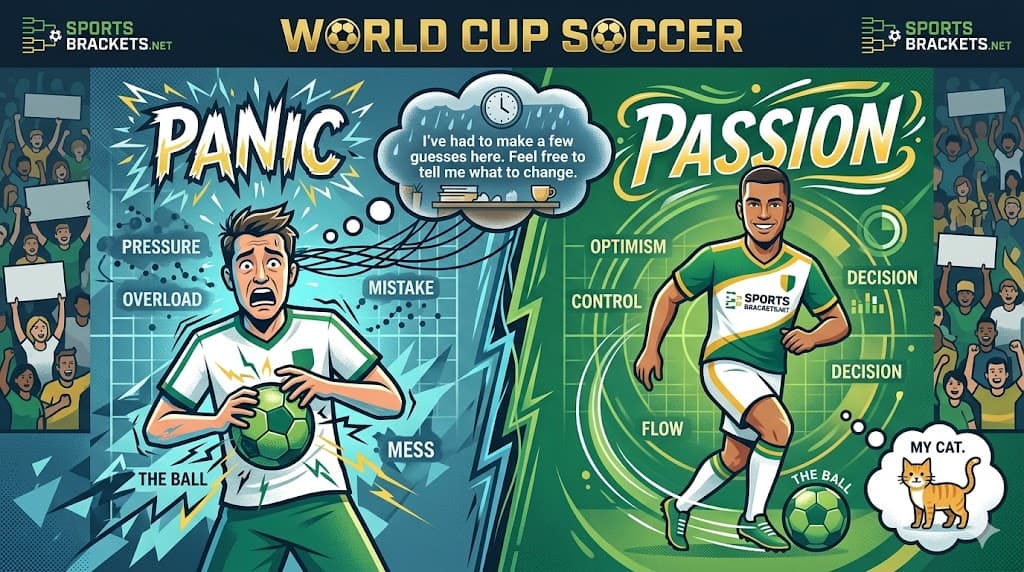
Panic is your body reacting to surprise. When you receive the ball without knowing what is around you, every option has to be worked out in real time while a defender bears down on you. That delay is what gets you dispossessed, and the bad outcome trains your brain to rush even more the next time. The fix is to remove the surprise. If you already know your options before the ball is at your feet, receiving it simply confirms a plan instead of starting one.
Scan Before the Ball Arrives
The single biggest habit that separates composed midfielders from panicked ones is scanning: quick glances over each shoulder while the ball is traveling toward you. Studies of top professional midfielders have tracked how often the best players check their surroundings in the seconds before they receive, and the pattern is consistent. More frequent scanning lines up with better decisions and more completed passes.
You do not need to count your glances. You just need to look away from the ball more than feels natural. Before the pass reaches you, answer three quick questions: Where is the nearest defender? Where is my closest open teammate? Which way is the space? If you have those answers, the ball arrives into a decision you already made.
Open Your Body and Make the First Touch a Decision
How you stand when you receive is half the battle. Face the play with an open body, hips pointed toward where you want to go rather than square to the passer, so you can see most of the field without turning. Then treat your first touch as a pass to yourself. A touch that pushes the ball into space, away from pressure and in the direction you already chose, buys you a full second and removes the trapped feeling. A touch straight into your feet invites the defender in. Slow is smooth: a controlled first touch into space beats a fast touch into trouble every time.
Pre-Decide, Then Keep It Simple
Composed players think one pass ahead. As the ball travels, pick your most likely option and a backup. If the first pass is on when you receive, play it early. If it is gone, the backup is ready and you are not freezing while you search. When in doubt, the simple pass is almost always the right one. A clean five-yard ball to a supporting teammate keeps possession and resets the pressure. You do not have to be brilliant in midfield, you have to be reliable.
Four Drills to Build Composure This Week
- Rondos (5v2 or 4v2): the best composure trainer in the game. Constant pressure forces you to scan, open up, and release the ball quickly.
- Scan-and-receive: a partner calls “left” or “right” as they pass, and you must glance and confirm the call before your first touch.
- Two-touch small-sided games: cap yourself at two touches so you are forced to decide before the ball even arrives.
- Wall passing with a turn: receive, open your body, play it back, repeat. This drills the open-body habit until it is automatic.
If you coach a team or want structured, age-appropriate sessions, the player and coaching resources at US Youth Soccer are a solid place to start.
Frequently Asked Questions
How do I stop panicking when I get the ball in midfield?
Scan before the ball arrives so you already know your options, open your body to see the field, and take your first touch into space instead of into your feet. The panic comes from surprise, so removing the surprise removes the panic.
Why do I freeze when defenders close in?
Freezing happens when you start working out your options only after receiving the ball. Decide your first pass and a backup while the ball is still traveling, and the pressure will feel much slower.
What is scanning in soccer?
Scanning is the habit of glancing over your shoulders to check your surroundings before you receive the ball. Top midfielders do it constantly, and it is one of the most trainable habits in the game.
How long does it take to improve composure on the ball?
Most players notice a difference within a few weeks of regular practice with rondos and two-touch games. Composure is a trained skill, so consistency matters more than natural talent.
More 2026 World Cup Resources
- 2026 FIFA World Cup Central – schedules, brackets, and team guides in one hub.
- 2026 World Cup Bracket Maker – fill out and print your own 48-team knockout bracket.
- 2026 World Cup Standings – live group tables for all 12 groups.
- 2026 World Cup City Schedules – match-by-match guides for all 16 host cities.
Don't Just Track the Bracket. Play for On-Chain USDC Rewards.
Take your 2026 World Cup predictions to the next level. Join 100+ managers already registered in the $BRACKETS League App-the premier high-performance fantasy sports playground.
⚡ Sign up in under 30 seconds via Email, Socials, or your favorite crypto wallet.