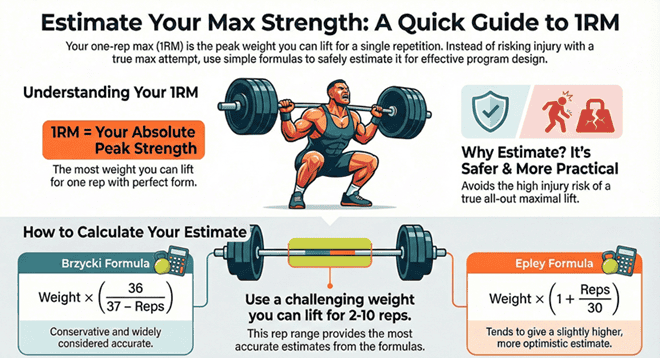
We now have a free, easy-to-use 1RM Calculator to help athletes, lifters, and fans estimate their one-repetition maximum (1RM) without risking injury on a true max attempt. Whether you’re prepping for NFL offseason strength training, tracking progress during Winter Olympics endurance events, or just hitting the gym, knowing your estimated 1RM is key for programming sets, percentages, and goals.
What Is a 1RM?
Your one-rep max (1RM) is the maximum amount of weight you can lift for one repetition with proper form on a given exercise (e.g., bench press, squat, deadlift). Directly testing it can be intense and risky, especially without a spotter. So submaximal estimates are safer and more practical. You can also checkout the 1RM chart from the NSCA here.
The 1RM Calculator uses two of the most popular and widely validated estimation formulas:
- Brzycki Formula (1993, by Matt Brzycki):
1RM = Weight × (36 / (37 – Reps))
Often considered conservative and accurate for reps in the 2–10 range; commonly used in strength training programs. - Epley Formula (1985, by Boyd Epley):
1RM = Weight × (1 + (Reps / 30))
Tends to be slightly more optimistic (higher estimate) than Brzycki for lower reps; popular in many online calculators and programs like Jim Wendler’s 5/3/1.
These formulas are empirical (based on real lifting data) and work best when you input a weight lifted to near-failure in 2–10 reps (ideally 3–8 for highest accuracy). Estimates can vary by ~5–10% from your actual 1RM depending on factors like experience level, exercise type (e.g., bench vs. squat), fatigue, and technique. Always use as a guide, not gospel.
How to Use the 1RM Calculator
- Enter the Weight Lifted (in lbs or kg. The units stay consistent in the output).
- Enter the Repetitions you completed with good form (to near or full failure).
- Select your preferred Formula (Brzycki or Epley).
- Click Calculate 1RM to see your estimated max.
Example: If you bench 225 lbs for 5 reps:
- Brzycki might estimate ~255–260 lbs.
- Epley might estimate ~262–265 lbs.
(Actual results vary—test with real lifts over time.)
Tips for Best Results:
- Use a weight that’s challenging but allows clean reps (70–90% effort range).
- Avoid inputs over 10 reps—accuracy drops significantly beyond that.
- Track over multiple sessions/exercises for trends.
- Always warm up properly and prioritize form/safety over numbers.
Disclaimer: This is an estimate only. This is not a substitute for professional coaching or supervised testing. Consult a trainer or physician before pushing limits, especially if new to lifting or recovering from injury.
1RM Calculator
1RM Calculator
Disclaimer: This is an estimate. Always prioritize safety and consult a professional.


